lucy@zlwyindustry.com
+86-158-1688-2025
Please Choose Your Language
- All
- Product Name
- Product Keyword
- Product Model
- Product Summary
- Product Description
- Multi Field Search

Views: 170 Author: Site Editor Publish Time: 2025-12-08 Origin: Site


A solenoid valve is a crucial component in various industrial and mechanical systems, playing a central role in fluid control. Whether it's for controlling water, air, or gases, solenoid valves are responsible for automating and regulating fluid flow in a precise and controlled manner. The valve uses an electromagnetic coil to control the operation of a valve, which is either open or closed based on the electrical input. Understanding how a solenoid valve works is essential for anyone involved in fluid systems design, maintenance, or repair. This article will explore in detail the operation, components, and applications of solenoid valves, along with tips for troubleshooting and maintaining them.
A solenoid valve is an electromechanical device used to control the flow of liquids or gases in a system. It functions through a solenoid coil, which when electrically energized, creates a magnetic field to either open or close the valve. The ability to control flow electronically makes solenoid valves highly efficient for automatic control systems.
Solenoid valves stand out from other valve types like ball valves or gate valves because they can be controlled remotely through electrical signals. This provides better automation and precision in fluid control. Traditional valves often require manual intervention, whereas solenoid valves can be integrated into automated systems, allowing for seamless operations.
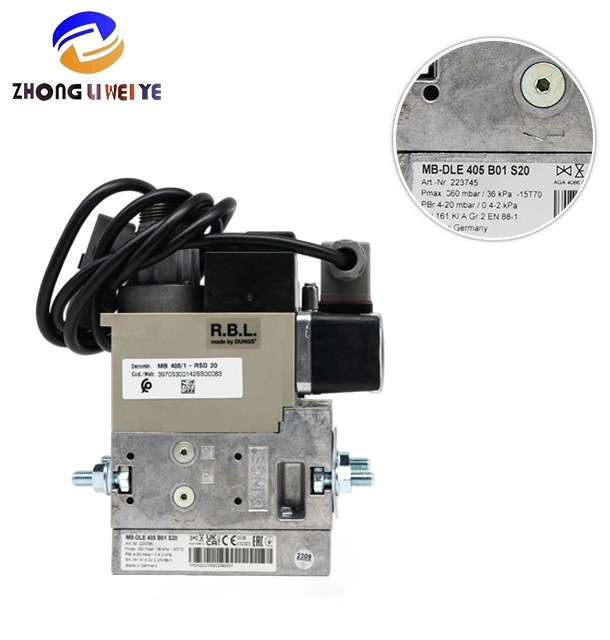
The working principle of a solenoid valve revolves around the interaction between the solenoid coil and the armature, which is a movable component that controls the valve's opening and closing. When the coil is energized, it generates a magnetic field that pulls the armature, either opening or closing the valve. The type of solenoid valve—normally open or normally closed—determines the default state of the valve when not energized.
When current flows through the solenoid coil, it generates a magnetic field. This magnetic field activates the plunger or armature, moving it within the valve body. This movement either opens or closes the valve depending on its configuration. Once the current is cut off, the spring mechanism (if present) returns the valve to its default position.
To fully understand how a solenoid valve works, it is important to break down its main components, each playing a crucial role in its operation.
The solenoid coil is the heart of the valve. It is responsible for creating the magnetic field that drives the valve’s operation. When energized, the coil produces a magnetic flux that moves the armature.
The armature is a movable metal part that responds to the magnetic field created by the solenoid coil. It connects to the valve mechanism and controls the opening or closing of the valve.
The valve body is the structure that houses the solenoid coil, armature, and other parts. It also contains the orifice through which fluid flows. The design of the valve body is critical to controlling the flow rate and pressure of the fluid.
The spring ensures that the armature returns to its default position when the electrical current is turned off. This component is crucial for the reliable operation of the valve.
There are various types of solenoid valves, each suited for different fluid control tasks. Understanding the different types and their specific applications can help in selecting the appropriate valve for a given system.
In this type of valve, the default position is closed when the coil is not energized. When current flows through the coil, the armature is lifted, opening the valve. These valves are commonly used when the system needs to stop the flow of fluid until a signal is sent.
A normally open valve is open when not energized. When current flows through the coil, the valve closes. This type of valve is used in applications where the system requires fluid to flow by default and only close when a signal is sent.
A two-way solenoid valve has two ports: an inlet and an outlet. It is commonly used in simple applications where fluid needs to be allowed or blocked from a specific path.
This valve has three ports and is often used to control the flow of fluid to two different paths, which can be alternated depending on the valve’s state.
A four-way valve is used to control the flow in systems that require the switching of fluid between multiple paths, such as in pneumatic actuators or hydraulic systems.
Solenoid valves are widely used in various industries such as:
Automotive: In fuel systems and air conditioning controls.
Manufacturing: For controlling air, water, or steam in automated machinery.
HVAC: To regulate temperature and airflow in heating and cooling systems.
Water Treatment: To control water flow in filtration or distribution systems.
The process of how a solenoid valve operates can be broken down into a series of steps:
The process begins when an electrical signal is sent to the solenoid coil. This signal energizes the coil, causing it to generate a magnetic field.
The magnetic field created by the solenoid coil pulls the armature, which is connected to the valve mechanism.
Depending on the type of solenoid valve, the armature’s movement will either open or close the valve. If the valve is normally closed, it will open, allowing fluid to pass. If it is normally open, it will close, preventing fluid flow.
Once the electrical signal is turned off, the magnetic field disappears, and the spring mechanism pushes the armature back to its default position, closing or opening the valve again.
Understanding the pros and cons of solenoid valves is important for making an informed decision on their use.
Automated Control: Solenoid valves can be controlled remotely via electrical signals, making them ideal for automated systems.
Quick Response: They respond quickly to electrical inputs, providing efficient fluid control.
Compact Design: Solenoid valves are typically compact and easy to integrate into various systems.
Energy-Efficient: They use minimal energy to operate and can be powered by low-voltage electrical signals.
Limited to Fluid Flow: Solenoid valves are best for fluid or gas control and may not be suitable for solids.
Wear and Tear: Due to the mechanical movement involved, solenoid valves can wear out over time, especially in high-cycle applications.
Sensitivity to Pressure: High-pressure systems may require special considerations when using solenoid valves to avoid malfunction.
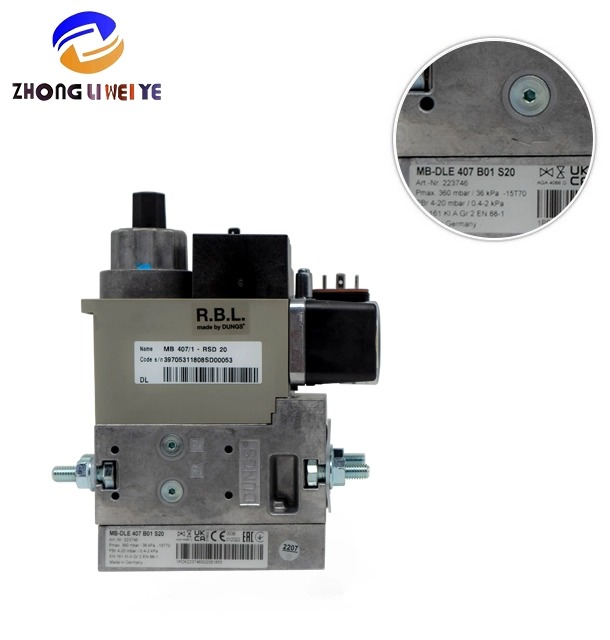
Solenoid valves can encounter various issues, but many of them are easy to resolve with proper troubleshooting.
This could be due to a power issue with the coil or a blocked valve. Checking the electrical connections and cleaning the valve can often resolve this problem.
Leaks may occur due to worn seals or improper installation. Inspecting and replacing seals is a common solution.
Erratic behavior can occur due to insufficient power supply or malfunctioning components. Ensuring a stable power supply and replacing faulty parts can often solve the issue.
Solenoid valves are an essential component in many industrial systems, offering precise and efficient control of fluid or gas flow. Understanding how they work, along with their key components and applications, allows for better maintenance and troubleshooting of these critical devices. By leveraging solenoid valves, industries can automate processes, improve system reliability, and ensure smoother operation across a wide range of applications.
Q1: What is the difference between a two-way and a three-way solenoid valve?
A two-way solenoid valve has two ports, an inlet and an outlet, and is used for simple on/off flow control. A three-way valve has three ports and can redirect fluid between two paths, offering more control over fluid flow.
Q2: Can a solenoid valve be used for high-pressure systems?
Solenoid valves are generally designed for low to moderate-pressure systems. For high-pressure systems, specialized solenoid valves are required.
Q3: What materials are commonly used for solenoid valve construction?
Solenoid valves are commonly made from materials like stainless steel, brass, and plastic, with materials chosen based on the specific application, such as resistance to corrosion or pressure.
Q4: How do I know when to replace a solenoid valve?
Signs of wear, such as persistent leaks, slow operation, or erratic performance, indicate that a solenoid valve may need to be replaced.