


A lightweight gas burner can make outdoor cooking simple, but the wrong stove can turn a short meal break into a frustrating experience. A weak flame in cold weather, unstable cookware, or an incompatible fuel canister may leave you unable to prepare a hot meal when you need one.
For first-time backpackers, choosing a gas burner involves more than comparing weight and heat output. Stove design, fuel chemistry, weather resistance, cooking style, and safety features all influence performance on the trail.
This beginner's guide explains the main types of backpacking gas burners, how to select compatible fuel, and what to look for in stove specifications. It also covers fuel planning, maintenance, and safe outdoor cooking practices.
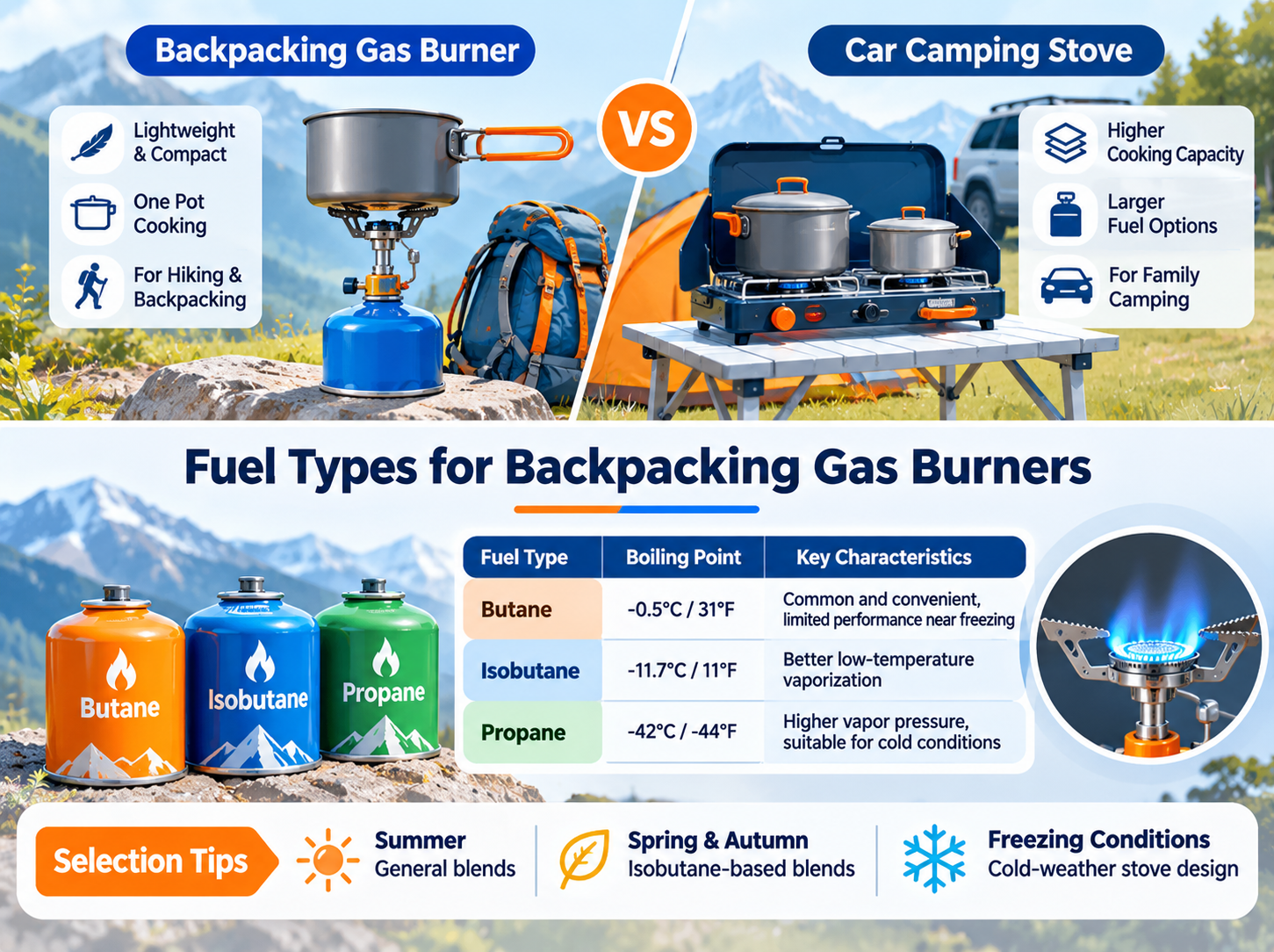
Backpacking Gas Burners vs. Car Camping Stoves
What Makes a Backpacking Gas Burner Different?
Backpacking gas burners are designed for hikers who must carry their cooking equipment over long distances. Unlike larger camping stoves, they prioritize portability, compact storage, and efficient use of limited fuel supplies.
Most backpacking models use a single burner and a small pressurized fuel canister. Some fold into a compact shape that fits inside a cooking pot, reducing the space required in a backpack.
Car camping stoves place greater emphasis on cooking capacity and cookware stability. Their larger burners and support surfaces can accommodate bigger pots, but their weight makes them less practical for hiking.
Key Differences Between Backpacking and Camping Stoves
| Feature | Backpacking Gas Burner | Car Camping Stove |
|---|---|---|
| Weight | Usually lightweight and compact | Generally heavier |
| Cooking Capacity | Typically one pot at a time | May support several pots |
| Fuel Supply | Small compatible gas canisters | Larger canisters or cylinders |
| Portability | Designed for carrying in a backpack | Designed for vehicle-supported travel |
| Typical Use | Hiking and overnight backpacking | Family camping and base camps |
Which Stove Is Suitable for Your Outdoor Activities?
Day hiking: A compact burner can be useful for preparing hot drinks or simple meals.
Weekend backpacking: A lightweight canister stove offers convenient cooking without excessive equipment weight.
Long-distance hiking: Fuel availability, stove durability, and packed weight become increasingly important.
Family camping: A larger stove may provide better cookware support and greater cooking flexibility.
Cold-weather expeditions: A stove with verified low-temperature performance may be necessary.
Understanding Fuel Types for Backpacking Gas Burners
Butane, Isobutane, and Propane Compared
Most backpacking canister stoves use liquefied petroleum gas mixtures. The proportions of butane, isobutane, and propane influence vapor pressure and cold-weather performance.
| Fuel Type | Approximate Boiling Point | Practical Characteristics |
|---|---|---|
| n-Butane | -0.5°C / 31°F | Vapor pressure becomes limited near freezing |
| Isobutane | -11.7°C / 11°F | Better low-temperature vaporization than n-butane |
| Propane | -42°C / -44°F | Higher vapor pressure and requires suitable containers |
| Mixed Gas | Depends on composition | Performance varies with blend, temperature, and remaining fuel |
These boiling points apply to pure fuels at normal atmospheric pressure. They should not be interpreted as guaranteed operating temperature limits for complete stove systems.
Why Backpacking Gas Burners Lose Power in Cold Weather
When a conventional canister stove operates, liquid fuel vaporizes inside the container before reaching the burner. This process absorbs heat, causing the canister to cool.
As the temperature decreases, internal vapor pressure falls. The stove may then receive less fuel, producing a weaker flame and longer cooking times.
The composition of a mixed-fuel canister can also change during use because its components vaporize at different rates.
Cold-weather performance therefore depends on several factors working together: the fuel mixture, canister temperature, stove design, and operating conditions.
How to Choose the Right Fuel for Your Trip
Summer hiking: Compatible backpacking gas blends are convenient for many short trips.
Spring and autumn: Consider isobutane-based blends and verify the stove's temperature limitations.
Freezing conditions: Evaluate cold-weather stove designs and the manufacturer's approved operating methods.
Remote destinations: Confirm fuel availability before departure.
International trips: Check local canister connection standards and transportation restrictions.
Never use an open flame or another uncontrolled heat source to warm a pressurized fuel canister.
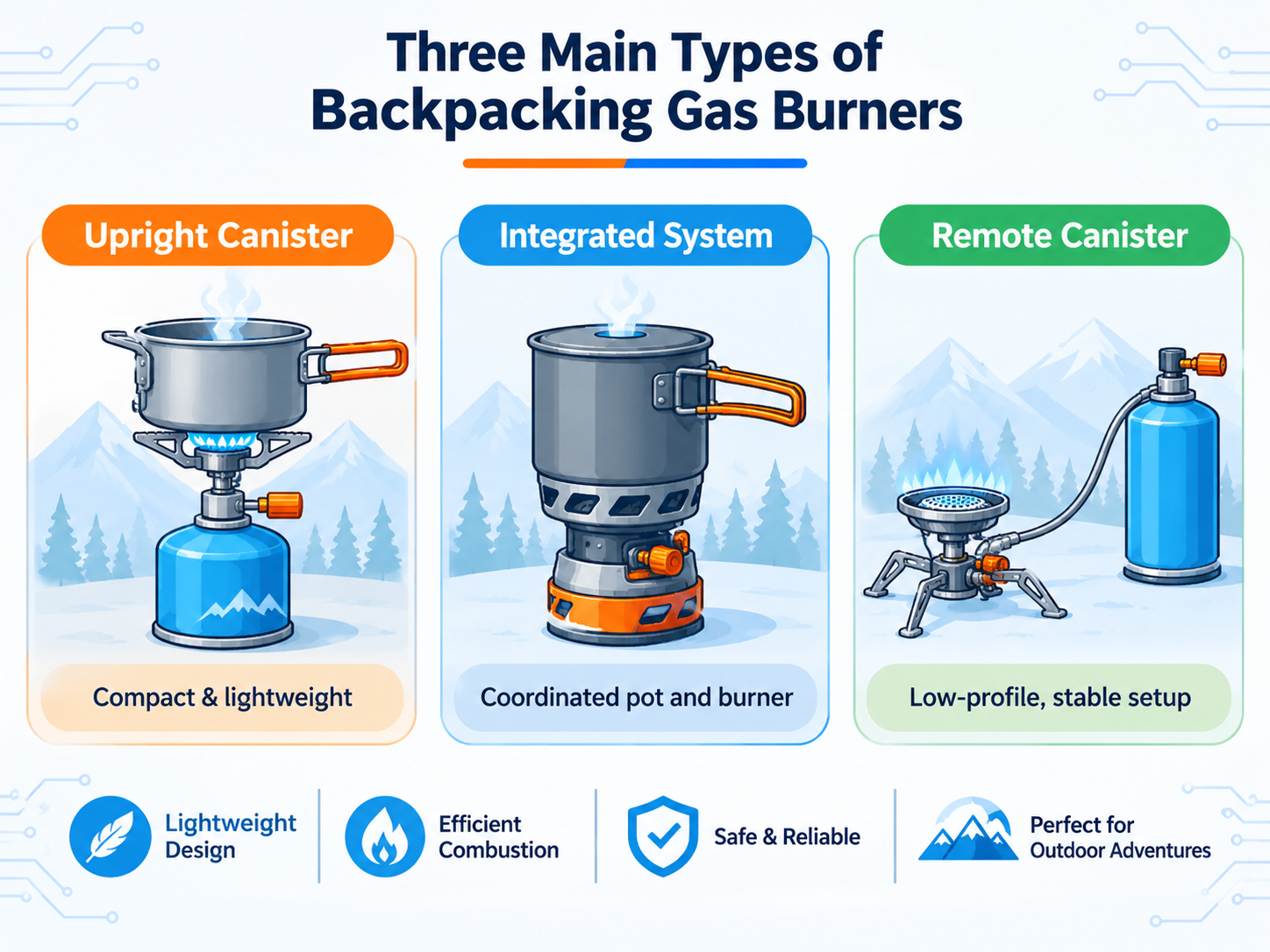
Main Types of Backpacking Gas Burners
Upright Canister Stoves
An upright canister stove connects directly to the top of a compatible fuel canister. This design is popular among beginners because it usually requires few components and occupies little space.
The burner head supports a cooking pot above the canister, creating a compact cooking system suitable for boiling water and preparing simple meals.
However, the elevated cooking position can make the setup less stable, especially when using large pots. Exposed burner heads may also lose considerable heat in windy conditions.
Upright stoves are generally practical for mild-weather backpacking where low weight and simple operation are priorities.
Integrated Backpacking Stove Systems
Integrated systems combine a compatible burner and cooking vessel into a coordinated design.
| Design Feature | Potential Benefit | Consideration |
|---|---|---|
| Heat Exchanger | Improves heat transfer in suitable conditions | Usually requires compatible cookware |
| Integrated Pot Connection | Provides coordinated burner-pot positioning | May limit cookware flexibility |
| Compact Storage | Components may nest together | Total system weight can exceed minimalist designs |
| Wind Protection | Can reduce heat loss | Performance depends on the specific design |
| Flame Control | Some models support simmering | Other models focus primarily on boiling water |
Remote Canister Stoves and Cold-Weather Designs
Remote canister stoves place the burner on the ground and connect it to a separate fuel container through a flexible line.
When evaluating these systems, follow this selection sequence:
Check stability: Determine whether the burner supports your intended cookware.
Review fuel compatibility: Confirm the approved canister type and connection.
Verify operating orientation: Check whether the stove supports upright-only or manufacturer-approved inverted-canister operation.
Examine cold-weather performance: Review tested operating conditions and any required fuel preheating design.
Compare packed weight: Include the fuel line, supports, and associated accessories.
Only remote canister stoves specifically designed for liquid-feed operation should be used with an inverted fuel canister.
How to Compare Backpacking Gas Burner Performance
Understanding BTU Ratings and Heating Power
BTU stands for British Thermal Unit, a measurement of energy. Stove manufacturers commonly express burner output in BTU per hour or watts.
A higher output rating indicates greater potential heat delivery, but it does not automatically mean better cooking efficiency.
For example, a powerful burner may waste heat when its flame extends beyond the cooking pot. A lower-output stove with effective heat transfer may use less fuel for the same task.
When comparing models, consider output together with fuel consumption, boil time, cookware compatibility, and wind performance.
How Wind Resistance and Cookware Affect Efficiency
| Operating Condition | Effect on Cooking | Practical Consideration |
|---|---|---|
| Calm Weather | More predictable heat transfer | Useful for comparing baseline stove performance |
| Moderate Wind | Greater heat loss around exposed burners | Use approved wind protection |
| Strong Wind | Possible flame instability and longer cooking times | Choose a sheltered outdoor location |
| Wide Cooking Pot | May capture heat differently from narrow cookware | Match pot dimensions to burner design |
| Heat Exchanger Pot | Can improve heat transfer | Verify compatibility with the stove |
A windscreen must not trap excessive heat around a pressurized fuel canister. Follow the manufacturer's instructions for permitted wind protection.
Flame Control, Simmering, and Ignition Features
Maximum heat output: Useful for boiling water, but not the only measure of performance.
Low-flame stability: Important when cooking rice, vegetables, and sauces.
Flame distribution: Influences how evenly cookware receives heat.
Piezo ignition: Provides convenient spark ignition but may fail because of moisture, contamination, or wear.
Backup ignition: A compatible lighter or other approved ignition source provides redundancy.
Control valve operation: Should allow predictable adjustment without excessive force.
Alternative Backpacking Stove Systems and Fuel Planning
Gas, Liquid Fuel, Alcohol, and Solid Fuel Compared
| Stove Type | Main Advantages | Main Limitations |
|---|---|---|
| Gas Canister Stove | Compact, convenient, and generally simple to operate | Fuel compatibility and cold-weather limitations |
| Liquid-Fuel Stove | Suitable for selected cold-weather and remote expeditions | More complex operation and maintenance |
| Alcohol Stove | Simple construction and potentially low stove weight | Lower output and limited flame adjustment |
| Solid-Fuel Stove | Compact fuel tablets and minimal equipment | Limited heat control and possible residue |
| Cold-Soaking Method | No burner or fuel required | Limited to suitable foods and preparation methods |
Each method has different safety and fire-restriction considerations. The most appropriate choice depends on the trip and the equipment permitted at the destination.
How to Estimate Fuel Consumption for Backpacking
Fuel requirements depend on how much water you heat, how often you cook, and the conditions in which the stove operates.
For example, suppose your stove uses approximately 10 grams of fuel to boil one liter of water during your own testing.
If you expect to boil two liters each day for four days, the baseline estimate is 80 grams of fuel.
This example is illustrative rather than a universal consumption rate. Wind, cold temperatures, different cookware, and longer cooking times may increase actual consumption.
A practical fuel estimate should therefore combine manufacturer data, personal testing, expected cooking needs, and a suitable reserve.
Fuel Planning Checklist for Different Trips
Short summer trip: Estimate the number of hot meals and drinks rather than assuming one canister will always be sufficient.
Week-long hike: Account for daily cooking and limited opportunities to purchase additional fuel.
Group backpacking: Calculate total cooking demand and how many stoves will be operating.
Cold-weather trip: Allow for reduced performance and increased heating requirements.
Snow-melting expedition: Include the additional fuel required to produce drinking water.
Fuel Compatibility and Backpacking Gas Burner Safety
Common Backpacking Fuel Canister Connections
| Connection Type | General Characteristics | Compatibility Requirement |
|---|---|---|
| Threaded Canister | Common on many modern backpacking stoves | Requires the correct threaded valve connection |
| Non-Threaded Valve Canister | Used by certain camping stove systems | Requires the matching manufacturer-approved connector |
| Pierceable Cartridge | Used by specific appliances | Must follow the appliance's cartridge handling requirements |
Never assume that visually similar fuel canisters are interchangeable. Unapproved adapters can introduce leakage and connection risks.
Why Carbon Monoxide Safety Matters
Backpacking stoves burn fuel and produce combustion gases. Under certain conditions, incomplete combustion generates carbon monoxide, a colorless and odorless gas that can cause serious poisoning.
Operating a stove inside a tent, enclosed vestibule, vehicle, or poorly ventilated shelter creates dangerous exposure conditions.
Backpacking gas burners should be operated outdoors in suitable locations, away from combustible materials and in accordance with the manufacturer's instructions.
Wind, rain, or cold temperatures do not make enclosed stove operation safe.
Safe Backpacking Stove Setup and Operation
Select the location: Use a stable outdoor surface clear of combustible materials.
Inspect the equipment: Check the stove, supports, seals, and canister for visible damage.
Confirm compatibility: Ensure the fuel container is approved for the stove.
Assemble correctly: Follow the manufacturer's connection instructions.
Check for leakage: Do not ignite equipment showing signs of a fuel leak.
Operate safely: Use the approved ignition procedure and remain nearby while cooking.
Shut down: Turn off the stove according to the instructions and allow it to cool before packing.
Maintenance, Troubleshooting, and Buying Advice
Common Backpacking Gas Burner Problems
| Problem | Possible Cause | Recommended Action |
|---|---|---|
| Weak Flame | Low canister pressure, cold fuel, or low remaining fuel | Assess conditions and follow manufacturer guidance |
| Ignition Failure | Igniter damage, moisture, or another equipment issue | Inspect the system safely before further use |
| Unstable Cookware | Uneven ground or unsuitable pot size | Use a stable surface and compatible cookware |
| Unusual Flame Behavior | Fuel delivery or burner-related problem | Shut down and investigate according to instructions |
| Suspected Gas Leak | Damaged seal or connection problem | Stop use immediately and follow the manufacturer's safety procedure |
How to Maintain and Store Your Backpacking Stove
Routine inspection helps identify worn seals, damaged components, and contamination before the next trip.
Check accessible O-rings and connection surfaces for visible deterioration. Replacement seals must match the manufacturer's specifications.
Clean the burner only using approved methods. Avoid inserting unsuitable tools into precision openings, as this can damage the equipment.
After use, allow the stove to cool and store it according to the manufacturer's instructions. Fuel canisters should be protected from excessive heat and physical damage.
Before air travel, confirm the applicable airline and aviation authority requirements. Pressurized camping gas canisters are generally prohibited in both carry-on and checked baggage.
What Should Beginners Check Before Buying?
Weight and packed size: Will the complete cooking system fit comfortably in your backpack?
Fuel availability: Can you purchase compatible fuel near your hiking destination?
Cooking style: Do you mainly boil water or prepare meals requiring simmer control?
Weather performance: Is the stove suitable for the expected temperature and wind?
Cookware stability: Can the burner safely support your intended pot?
Maintenance: Are instructions and approved replacement parts available?
Backpacking gas burners are specialized outdoor cooking appliances. They differ from the industrial gas burners used in boilers and process heating systems, where combustion controls, fuel regulation, and safety integration are designed for different operating requirements.
Conclusion
Choosing the right backpacking gas burner starts with understanding your trip rather than focusing on the highest heat output or lowest equipment weight. A compact upright stove may be sufficient for mild-weather weekend hiking, while extended journeys and colder conditions require closer attention to fuel characteristics, stability, and system design.
Beginners should prioritize compatible fuel, reliable ignition, suitable cookware, realistic fuel planning, and safe outdoor operation. Practicing with the stove before departure can also help identify equipment limitations and improve confidence on the trail.
Although backpacking stoves and industrial combustion equipment both rely on controlled fuel burning, they serve very different purposes. Shenzhen Zhongli Weiye Electromechanical Equipment Co., Ltd. focuses on industrial burner equipment and related combustion applications, where selection criteria differ from those of portable outdoor cooking systems.
FAQ
What is the best backpacking gas burner for beginners?
A lightweight upright canister stove is suitable for many beginners because it is compact, relatively simple to use, and practical for basic outdoor cooking.
Which gas fuel is best for cold-weather backpacking?
Isobutane-propane blends may perform better than pure n-butane in cold conditions, but actual performance depends on the blend, canister temperature, and stove design.
Are integrated backpacking stoves more efficient?
Some integrated systems improve heat transfer through coordinated burner and cookware designs, although actual fuel efficiency varies with weather and operating conditions.
How much fuel do I need for a backpacking trip?
Fuel requirements depend on trip duration, group size, cooking frequency, weather, and stove efficiency, so estimates should include measured consumption and an appropriate reserve.
Can I use a backpacking gas burner inside a tent?
No, backpacking gas burners should not be used inside tents or enclosed spaces because of carbon monoxide poisoning and fire hazards.
Why does my backpacking gas burner lose power?
Cold fuel, reduced canister pressure, low remaining fuel, or equipment problems can cause weak burner performance.
Can I take a backpacking gas burner on an airplane?
Empty stove transport may be permitted under specific conditions, but gas canisters are generally prohibited; always verify current airline and aviation authority rules.