lucy@zlwyindustry.com
+86-158-1688-2025
Please Choose Your Language
- All
- Product Name
- Product Keyword
- Product Model
- Product Summary
- Product Description
- Multi Field Search

Views: 0 Author: Site Editor Publish Time: 2026-11-07 Origin: Site


Reliable heating systems demand absolute precision in fuel delivery. At the heart of this critical process, Burner Oil Pumps pressurize fuel to ensure reliable atomization and efficient combustion. When they falter, the entire thermal ecosystem grinds to an immediate halt. Pump failure represents much more than a minor inconvenience. It acts as a primary catalyst for sudden system lockouts, severe safety hazards, and incredibly costly downtime in your facility or home. Left unchecked, erratic fuel delivery heavily degrades heat exchangers and wastes valuable energy.
This guide delivers a complete diagnostic framework for troubleshooting these vital components. We will help you identify the precise root causes behind common pressure drops and mechanical faults. You will learn exactly how to evaluate the viability of a repair versus a full replacement. Finally, we provide clear, actionable steps to execute safe, compliant fixes while matching proper operational specifications.
Early detection prevents minor faults from evolving into major heating disasters. You must recognize subtle changes in equipment behavior immediately. Catching these specific symptoms early saves money and ensures facility safety.
Your primary control incorporates a highly sensitive safety lockout mechanism. It shuts the entire burner down if it detects a loss of flame. A failing pump often struggles to deliver adequate oil volume consistently. This fuel starvation causes the flame to drop out rapidly. The control then triggers a hard safety lockout. Frequent manual resets point directly to restricted fuel delivery.
Healthy pumps produce a steady, low-level operational hum. Problematic sounds indicate internal distress clearly. You might hear a high-pitched whining noise during operation. This sharp sound usually indicates severe gear wear or a high vacuum restriction. Alternatively, a harsh grinding sound signals imminent bearing failure. Never ignore mechanical noise. It alerts you to friction actively destroying the internal components.
External leaks demand your immediate attention. You might spot fresh oil pooling beneath the heating appliance. This situation presents serious environmental compliance risks. It also creates a severe fire hazard in your building. Visible external leaks almost always point directly to shaft seal degradation. The pump can no longer contain pressurized fuel safely.
Fluctuating pump pressure directly ruins your fuel atomization process. The nozzle sprays large oil droplets instead of a fine, combustible mist. These heavy droplets burn incredibly poorly. As a result, heavy soot builds up quickly across the heat exchanger. You will notice highly inconsistent heating performance. The equipment loses its thermal efficiency rapidly.
Effective troubleshooting relies entirely on objective measurement. Guessing leads to wasted parts and prolonged downtime. We utilize a structured diagnostic framework. It separates simple flow blockages from catastrophic mechanical failures.
Fuel contamination causes the vast majority of sudden shutdowns. Sludge and debris routinely build up inside the main oil tank. Sometimes, this fine debris bypasses the primary filter entirely. It travels down the suction line and clogs the pump's internal strainer. This severe blockage starves the gearset of essential fluid.
Diagnostic Fix: First, isolate the main fuel supply completely. Remove the pump cover to access the internal strainer. Inspect the mesh screen very carefully. Replace it immediately if you see heavy sludge accumulation. Reassemble the unit and bleed the system thoroughly. We highly recommend upgrading your primary tank filters. Better external filtration prevents the problem from ever recurring.
Sometimes the motor runs perfectly, but the nozzle receives insufficient oil. The pump simply fails to deliver the required pressure. This lack of force prevents proper fluid atomization.
Diagnostic Fix: Never guess internal pressure levels. Attach an accurate pressure gauge directly to the pump's dedicated gauge port. Read the output carefully. Standard residential systems typically require 100 to 150 PSI. Commercial setups demand much higher numbers. Compare your exact reading to the manufacturer specifications. Try adjusting the pressure regulating valve slowly. Watch the gauge closely. If the pressure fluctuates wildly or fails to rise, you have a major problem. The internal gearset is compromised beyond simple repair.
Air poses a massive threat to closed fluid systems. Air easily enters the fuel line before reaching the intake. This intrusion causes a sudden loss of prime. You will notice incredibly noisy operation and highly erratic pressure delivery.
Diagnostic Fix: Install a proper vacuum gauge to check the suction line. High vacuum readings indicate a severe restriction. You might have a kinked copper line or a heavily clogged filter. Conversely, low or bouncing vacuum readings indicate an active air leak. Air is entering the system instead of fluid. Inspect the entire pipe run. Reseat all flare fittings carefully. Replace any defective valves immediately.
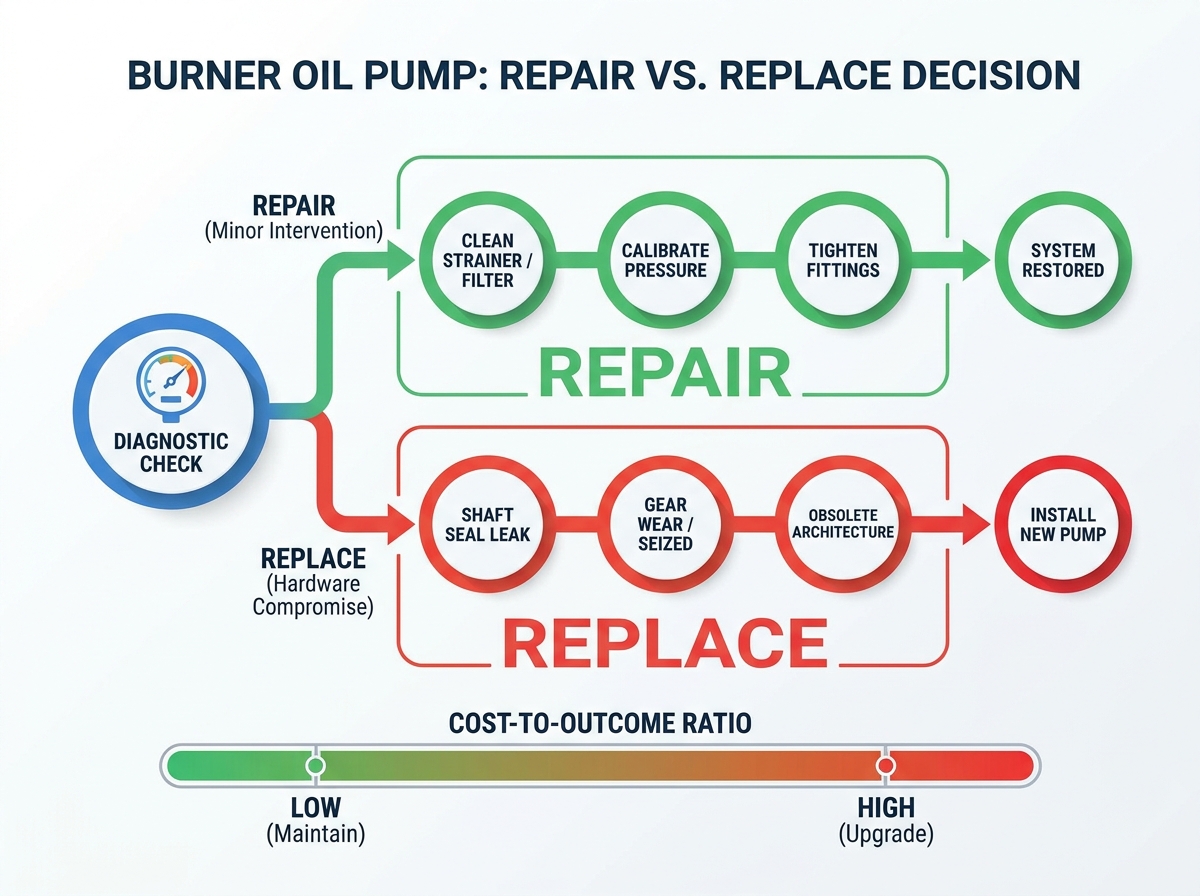
Deciding between a quick repair and a full replacement challenges many technicians. You must evaluate the component age and overall hardware integrity carefully. Making the right call restores safety quickly and minimizes future expenses.
Simple maintenance fixes restore basic function efficiently. You should attempt repairs strictly under the following specific conditions. First, blockages remain isolated to external filters or the internal strainer. You can clean these items easily. Second, you notice only minor pressure drift. If the pressure holds perfectly steady after a quick recalibration, the internal gears remain viable. Finally, consider the cost-to-outcome ratio carefully. Standard maintenance clear-outs require minimal labor and cheap parts. They make excellent financial sense.
Severe mechanical failure demands decisive action. You must replace the entire unit when encountering these specific structural faults.
Shaft Seal Leaks: Leaking shaft seals cause massive environmental messes. They are rarely cost-effective to rebuild in the field. Rebuilding them correctly requires extreme precision and exact manufacturing tolerances. Field conditions simply do not allow for reliable seal replacement.
Gear Wear and Seized Shafts: Sometimes the internal components bind up completely. Mechanical binding prevents the unit from spinning freely. Alternatively, the worn gears simply cannot build enough force. These situations necessitate an immediate, full replacement.
Obsolete Architecture: Older units eventually lose market relevance. You might own an inefficient, outdated model. Upgrading to a modern, bio-fuel compatible pump makes perfect sense. Today, B20-rated units ensure full compliance with evolving environmental fuel standards. They handle blended fuels perfectly without degrading internal seals.
Decision Matrix: Repair or Replace Scenarios
| Observed Condition | Recommended Action | Primary Reasoning |
|---|---|---|
| Clogged Internal Strainer | Repair / Clean | Low cost intervention. Restores flow instantly. |
| Minor Pressure Drift | Repair / Recalibrate | Gears remain intact. Valve adjustment fixes issue. |
| Leaking Shaft Seal | Replace Entire Unit | Field rebuilds fail often due to tight tolerances. |
| Seized Internal Shaft | Replace Entire Unit | Catastrophic mechanical binding. Unrepairable. |
| Incompatible with Biofuel | Upgrade / Replace | Ensures compliance and prevents future seal decay. |
You decided to replace the compromised unit. Now, you must select the absolute correct hardware. Mismatched components cause catastrophic installation errors instantly. You must verify several critical specifications before ordering.
Your new hardware must align perfectly with the existing system setup. You cannot guess these important numbers.
Heating systems utilize vastly different fuel delivery methods. You must understand your specific piping setup thoroughly. Single-pipe systems rely on simple gravity feed mechanics. The tank sits higher than the appliance. Two-pipe systems require active lifting power. The tank sits below the burner level.
This critical distinction involves a tiny internal component. You must manage the internal bypass plug correctly. If you leave a two-pipe bypass plug installed on a single-pipe system, disaster strikes. The internal pressure skyrockets instantly. This simple mistake destroys the new shaft seal in seconds. Always configure the internal plug based on your exact piping layout.
We highly recommend sticking to industry-standard component architectures. Brands like Suntec, Beckett, and Danfoss dominate the professional market. Staying within established brand ecosystems provides distinct installation advantages. You guarantee direct bracket compatibility instantly. You also ensure highly predictable performance metrics. Mixing obscure brands often leads to frustrating mounting issues and unreliable flow rates.
Installing the new replacement requires extreme care. Rushing the process introduces fresh failures. Follow these proven best practices carefully to protect your new investment.
Never connect a brand-new unit to a filthy line. You must flush the fuel line completely prior to connection. Sludge lingering in the pipes will instantly contaminate the new unit. Flushing the line guarantees a clean fuel source and prevents instant clogs.
Air always traps itself inside new components. You must purge all air from the system completely. Use the built-in bleeder valve actively. Follow these steps during your commissioning phase:
Trapped air causes severe "after-drip" at the nozzle. This creates heavy soot and highly dangerous delayed ignition scenarios.
Do not trust factory settings implicitly. The factory-set pressure serves only as a rough baseline for testing. Commissioning a new unit requires a high-quality gauge. You must set the exact PSI specified by your specific appliance manufacturer. Adjust the valve carefully until the gauge hits the target number perfectly.
Complex fuel installations carry significant operational risk. You must recognize exactly when standard DIY ends. Certain tasks require certified HVAC technicians immediately. They possess the advanced tools needed for precise combustion analysis. They also handle the environmental disposal of oil-soaked parts legally. Professional oversight ensures your system runs cleanly, efficiently, and safely.
Resolving fuel delivery issues demands a highly methodical diagnostic approach. You must separate basic flow restrictions clearly from severe mechanical destruction. Guessing pressure values or ignoring small leaks invites compounding equipment damage. It also introduces severe safety risks directly into your building.
Take decisive, informed action today. We strongly encourage you to consult with a certified technician for a professional pressure test. Alternatively, review a trusted catalog of OEM-approved replacement parts and diagnostic gauges to secure the exact hardware you need.
A: Typically, these units last between 10 and 15 years under normal operating conditions. You must perform annual filter maintenance consistently to reach this maximum lifespan. However, poor fuel quality drastically reduces their longevity. Sludge and water contamination destroy the internal gears prematurely.
A: No. Visual inspection of the flame cannot accurately determine the internal PSI. A proper oil pressure gauge remains absolutely mandatory for safe calibration. Guessing the pressure leads to heavy soot production and highly dangerous operating conditions.
A: The most common cause involves improper configuration of the internal bypass plug. Leaving this plug installed on a single-pipe gravity feed system creates a severe restriction. The internal pressure spikes immediately, which over-pressurizes and blows the delicate shaft seal out.
A: No. Older equipment often utilizes internal seals that degrade quickly when exposed to biofuel blends. Modern replacements specifically indicate B20 or higher compatibility. Always check the manufacturer specifications carefully to ensure your hardware safely handles modern environmental fuel mixtures.