lucy@zlwyindustry.com
+86-158-1688-2025
Please Choose Your Language
- All
- Product Name
- Product Keyword
- Product Model
- Product Summary
- Product Description
- Multi Field Search



| Quantity: | |
|---|---|


Navigating today’s volatile energy landscape requires equipment that can adapt instantly without sacrificing performance. This dual-fuel combustion system resolves traditional fuel dependency by integrating natural gas and liquid fuel capabilities—such as propane, diesel, or biofuels—into a single, highly efficient unit. Designed specifically for intensive industrial environments where operational continuity and fuel availability fluctuate, this burner acts as a strategic asset. By enabling operators to pivot between fuel sources based on real-time market pricing or supply availability, it effectively hedges against energy cost spikes and delivers a measurable return on investment, all while advancing environmental sustainability goals.
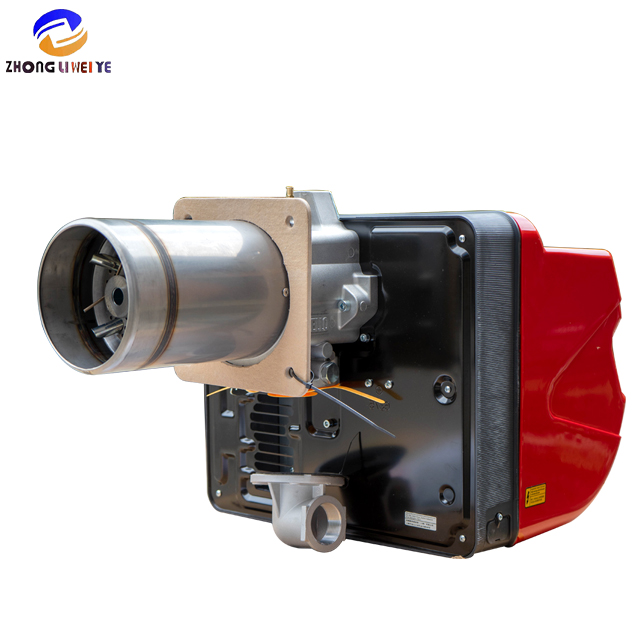
The physical construction of the burner immediately communicates durability. Encased in a heavy-duty, corrosion-resistant alloy with a tactile, industrial-grade powder-coated finish, the unit is engineered for longevity in demanding conditions. Its architecture prioritizes seamless system adaptation and integration. Whether you are docking it with large-scale industrial hot water boilers, high-pressure steam boilers, or complex thermal fluid heat exchangers, the modular flange design ensures a precise fit for both new installations and retrofit projects without requiring extensive structural modifications.
A sophisticated control framework governs the entire combustion process, ensuring stable thermal output under varying loads and shifting fuel compositions. This intelligent automation minimizes manual intervention, reduces unexpected downtime, and maximizes resource utilization. When operating, the system emits a steady, controlled hum—a testament to its precision-balanced air blowers and optimized fuel delivery network. By combining rugged mechanical craftsmanship with adaptive digital controls, this burner redefines operational resilience, providing a stable, low-carbon foundation for energy-intensive processing facilities worldwide.
Moving beyond conventional single-fuel limitations, this system incorporates an advanced dual-fuel injection network that dynamically adjusts fuel ratios based on real-time operational data and operator inputs. A unique hybrid combustion mode permits the simultaneous use of gas and liquid fuels, optimizing thermal energy output while leveraging the specific advantages of each source—such as utilizing gas for clean-burning peak demands and liquid fuel for sustained, heavy base loads. The fully automatic fuel switching mechanism ensures zero interruption during supply transitions, allowing procurement teams to capitalize on off-peak fuel pricing and significantly lower comprehensive operating expenses.
Equipped with a neural network-powered control module, the burner achieves exceptional combustion precision tailored to your specific process load. Operators can select from multiple control modes to match their exact requirements:
A detailed analysis of the core components reveals a commitment to industrial-grade manufacturing standards. The precision-machined burner head ensures optimal fuel atomization, while the integrated fuel supply system utilizes heavy-duty pumps and reinforced piping to handle varying viscosities smoothly. The solid-state ignition control module guarantees rapid, reliable starts even in damp or cold environments. Furthermore, the modular construction enables capacity scaling from 50 kW to 50 MW. Interchangeable fuel nozzles and scalable air blower configurations mean the system can grow alongside your facility's expansion without necessitating a complete unit replacement.
Engineered to exceed stringent global emission frameworks, including EPA Tier 4, EU MCPD, and IMO Tier III standards, the burner is a proactive solution for environmentally sensitive zones. The two-stage combustion chamber utilizes swirl-stabilized flame technology, which fundamentally alters the combustion dynamics to reduce NOx formation by 40% compared to standard legacy burners. When paired with the optional catalytic aftertreatment system, CO and VOC emissions are further mitigated, resulting in a clean, visually clear exhaust profile. The architecture also fully supports low-sulfur and sulfur-free liquid fuels.
Safety and ease of maintenance are engineered directly into the chassis. The system features multi-point optical flame monitoring and automated anti-leak safety valves that instantly isolate fuel lines in the event of a pressure drop. Designed for harsh environments, the thermal-insulated internal components comfortably withstand radiant temperatures up to 1,200°C. Routine maintenance is simplified through a modular layout: the dual-layer liquid fuel filter system prevents impurity clogs and can be swapped out in minutes, while the hinged burner door allows instant access to the firing head and nozzles without disconnecting main fuel lines.
Perfectly suited for continuous steam generation in petrochemical plants, large-scale food processing facilities, and pulp and paper mills. In these environments, precise temperature control and absolute fuel reliability are critical for maintaining batch quality. The burner’s capacity to seamlessly switch to heavy fuel oil during unexpected natural gas pipeline pressure drops ensures continuous, uninterrupted operation, safeguarding process integrity and preventing costly production halts.
This system actively supports the transition to hybrid energy models by combining traditional fossil fuels with sustainable alternatives like biodiesel or biomethane. It is the ideal combustion engine for biomass co-firing plants, waste-to-energy conversion facilities, and combined cycle power stations that are actively working to reduce their carbon footprint and reliance on strictly traditional fuel sources, allowing for a phased, financially viable green transition.
Deployed extensively in backup power generation systems for hyperscale data centers, regional hospitals, and telecommunication hubs where continuous power is non-negotiable. The solid-state ignition and optimized fuel delivery allow for a rapid startup capability—achieving full flame stabilization in under 30 seconds from a cold standby state. The dual-fuel redundancy guarantees seamless load transfer and continuous operation during prolonged grid outages or primary fuel supply chain disruptions.
Provides highly controlled thermal output for large-capacity drying ovens used in grain processing, expansive commercial greenhouse heating networks, and industrial waste incinerators. The precision air-fuel mixing results in a low-emission profile that complies with strict agricultural and municipal pollution regulations. Additionally, its robust filtration system accommodates locally sourced, lower-grade biofuels or waste-derived liquid fuels, turning local waste streams into usable thermal energy.
Beyond universal boiler applications, this Dual Fuel Burner is engineered to be fully compatible with Ecoflam brand systems. It offers seamless mechanical and electrical docking into existing Ecoflam burner frameworks and control panels. For facilities already utilizing Ecoflam's range of industrial heating solutions, this burner acts as a direct, high-performance upgrade, providing immediate dual-fuel flexibility, enhanced operational efficiency, and modernized safety protocols without the need to overhaul the entire boiler room infrastructure.
To assist facility engineers and system integrators in precise equipment planning, the following core engineering parameters define the operational boundaries and integration requirements of the burner system.
| Engineering Parameter | Specification / Requirement |
|---|---|
| Capacity Range | 50 kW to 50 MW (Modularly scalable) |
| Thermal Efficiency | Up to 96% (Under ideal stoichiometric conditions) |
| Liquid Fuel Viscosity Limit | Max 50 cSt at 50°C (Standard configuration) |
| Supported Liquid Fuel Grades | Diesel, Biofuels, Fuel Oil (Up to ISO-F-DMA) |
| Hydrogen Blending Capability | Up to 50% hydrogen by volume (With specialized variant) |
| Modulating Turndown Ratio | Stable combustion down to 20% of rated capacity |
| Thermal Resistance | Internal components withstand up to 1,200°C |
| Cold Start Ignition Time | Under 30 seconds from standby to flame stabilization |
A: The standard mechanical configuration comfortably supports diesel, commercial fuel oil (up to ISO-F-DMA specifications), and various biofuels with a maximum viscosity of up to 50 cSt at 50°C. If your facility utilizes heavier residual fuels or specialty high-viscosity blends, we offer optional integrated pre-heating and advanced multi-stage filtration modules to ensure smooth atomization and prevent nozzle degradation.
A: No extensive specialized training is necessary. The unit features an intuitive, high-resolution HMI interface that significantly minimizes the learning curve. It provides clear, step-by-step visual guides for executing fuel switching, adjusting modulating parameters, and running diagnostic procedures. Furthermore, comprehensive operator manuals, detailed online training modules, and access to our 24/7 technical support engineering team are provided with every installation.
A: While the base model is rigorously optimized for natural gas and liquid fuel combinations, we manufacture a specific hydrogen-ready variant. This upgraded model features specialized metallurgy to prevent hydrogen embrittlement and enhanced leak-detection safety features, allowing it to safely process applications using up to 50% hydrogen by volume. Please contact our engineering team for a detailed site and compatibility assessment.
A: Efficiency during low-demand periods is managed by the adaptive control system, which maintains incredibly stable combustion down to 20% of the unit's rated capacity. By synchronizing variable speed air blowers with precision liquid and gas fuel metering valves, the system dynamically adjusts the air-to-fuel ratio. This prevents the energy waste typical of frequent on/off cycling and ensures consistent thermal efficiency across the entire operational load range.
A: For standard capacity units, manufacturing and testing are typically completed, making them available for dispatch within 4-6 weeks. For highly customized solutions—which may include specific material upgrades for corrosive environments, custom flange dimensions, or specialized heavy-fuel setups—the production cycle typically requires 8-12 weeks. Dedicated site-specific engineering support is assigned to your project and included throughout the entire design and manufacturing process.