lucy@zlwyindustry.com
+86-158-1688-2025
Please Choose Your Language
- All
- Product Name
- Product Keyword
- Product Model
- Product Summary
- Product Description
- Multi Field Search



| Quantity: | |
|---|---|


RLS100
RIELLO
The High Efficiency Dual Fuel Burner for Renewable Energy is a highly adaptable combustion system engineered to future-proof industrial operations against energy market volatility and tightening regulatory standards. Designed to operate reliably on multiple fuel combinations—such as natural gas paired with propane, or light oil blended with hydrogen—this burner provides essential operational redundancy and long-term cost efficiency. Equipped with smart, self-regulating mechanisms, the system dynamically adjusts to variations in fuel quality, ensuring stable and consistent thermal output across demanding sectors like petrochemical refining and agro-processing. Constructed to endure extreme temperatures and corrosive industrial atmospheres, the unit incorporates fail-safe mechanisms that prioritize facility safety while maintaining required production capacities. By effectively bridging traditional fossil fuels with emerging renewable energy sources, this dual fuel burner enables facility managers and procurement teams to achieve immediate economic savings while meeting long-term sustainability and emission reduction targets.
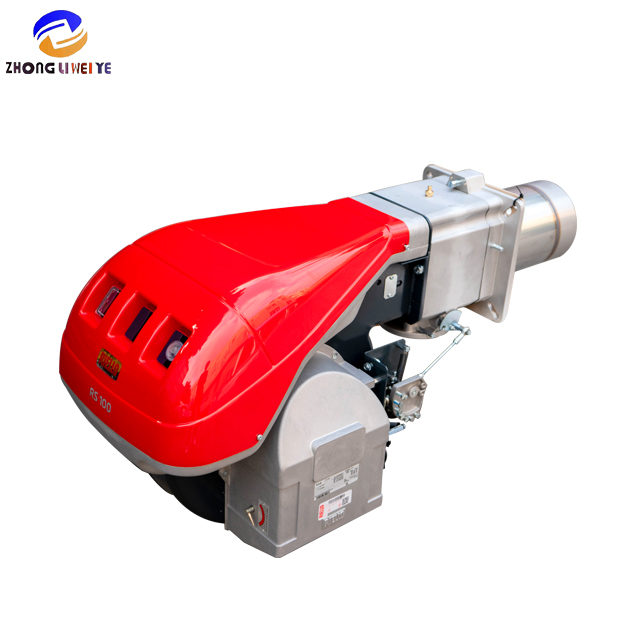
These dual fuel burners are designed to address complex thermal energy challenges across diverse industrial sectors, helping procurement teams align equipment capabilities with specific site requirements:
Q: How energy-efficient are these dual fuel burners for industrial applications?
A: Models equipped with staged combustion technology and adaptive airflow controls achieve thermal efficiency ratings of 92–95%. This optimized performance can cut annual fuel costs by up to 30% when compared to conventional single-fuel units, offering a strong return on investment.
Q: Are the burners suitable for deployment in extreme cold climates?
A: Yes. Arctic-grade versions are specifically engineered with trace heating for fuel lines, cold-start ignition systems, and heavily insulated housings, allowing them to operate reliably in ambient temperatures as low as -40°F (-40°C).
Q: What types of fuel characteristics are incompatible with the standard system?
A: Fuels containing particulate matter larger than 5 microns or sulfur concentrations exceeding 0.1% may cause accelerated wear. For these fuel types, we recommend integrating standard filtration or desulfurization add-ons prior to combustion to protect internal components.
Q: Can operational emissions be monitored remotely for compliance reporting?
A: Yes, the burners feature integrated emissions sensors that feed real-time data directly to centralized ESG reporting platforms. This simplifies environmental compliance with regional carbon trading schemes and local air quality regulations.
Q: What is the typical operational lifespan of the burner unit?
A: With adherence to recommended maintenance schedules, the burners deliver 15–20 years of reliable service. Critical wear components, such as nozzles and igniters, utilize a modular design to facilitate quick, cost-effective replacement and reduce maintenance downtime.
Q: Do these systems support hydrogen blending for decarbonization efforts?
A: Hydrogen-ready models are constructed with upgraded metallurgy and specialized flame detection systems, enabling them to safely handle and combust hydrogen concentrations of up to 30% within natural gas mixtures.